
Why Am I Always Hungry?

Why Am I Always Hungry?

Why Am I Always Hungry?

Registered Dietitian, Katherine Kimber answers the most common reasons people wonder “why am I always hungry”. 

There it is again… that insatiable hunger, you’ve already had lunch, and it’s your 4th trip to the fridge to seek out food. “Why am I always hungry”, you ask. Huffing to yourself.

Whilst I talk a lot about intuitive eating, honouring your natural signals, and listening to your body, you might be wondering why you’re still back and forth looking for food, when you know you’ve already eaten and you’re not hungry! This article dives into 9 common reasons why you feel hungry all of the time.

In principle, eating should be quite simple. You get hungry, you eat, you move on with your day. But unfortunately, our diet plagued society teaches us that we can’t be trusted to listen or respond to our own bodies. That we try to control and stop feeling hungry. That we need to look to external sources (like the clock, apps, portion sizes, labels, calories, meal plans, points systems) to tell us when to eat, what to eat and how much to eat.

These external sources can teach us to go to our head to make decisions around food, as opposed to connecting with our bodies and what it really needs. And whilst of course we do need to use our mind to make decisions, there is a difference between a a diet driven mindset, and a self-care mindset:

(a) “I can’t possibly be hungry. I just ate breakfast an hour ago. Eugh. Why do I always feel hungry” (diet mindset, results in guilt, not honouring body)

And 

(b) “I’m noting hunger signals despite eating breakfast an hour ago (curious mindset). My body needs more food today. I better eat something (connecting with the body, recognising the need to eat, which is a self-care, compassionate mindset)”

Listening to the diet mindset (a), can create body distrust, and disconnected eating. We are made to feel guilty, for simply nourishing our bodies.

In this article, I am therefore going to outline 9 common reasons why you might feel hungry all the time, and how to connect with your innate wisdom and know what your body needs. 
But are you really eating enough?

Hunger doesn’t just show up in the stomach, so this is really important. Because the only way to satisfy physical hunger is by eating enough food. The single biggest reason why you might be feeling physically hungry all of the time, is simply that you’ve not eaten enough at your last meal, throughout the day, or even yesterday.

Whilst diet culture teaches us that we can’t be trusted around food, and that we can’t control ourselves, I want to remind you that you don’t need to “earn your food”. You don’t need to deprive or withhold yourself. In fact, by doing so, it might be suppressing energy levels, and limiting your ability to pursue things that are important to you. Hunger is normal, healthy and a sign that your body is working. Having regular hunger signals may be a sign that your body is working as it should! When we habitually ignore these signals, they atrophy over time and our ability to listen and respond is compromised.

What does physical hunger look like?

Physical hunger can show up in a number of places, not just the stomach.

For example:

  • Head: achey, light headed, dizzy, distracted, poor concentration
  • Energy levels: tired, sleepy, sluggish, meh
  • Mood: hangry, irritable, cranky, snappy, moody, low
  • Stomach: gurgling, rumbling, emptiness, stomach ache, gnawing, sicky feeling
  • Body: shaky, quivery, low blood sugar, salivating, sicky feeling in throat or chest

Developing awareness of, and sensitivity to, these internal physiological sensations (more technically known as interoceptive awareness) through consistent practice and listening, can help you to develop more trust in your body. Preliminary research also indicates that eating in response to early signs of hunger may help improve long-term blood glucose control.

Are you filling up on rice crackers and celery? (Aka high bulk low calorie foods?)

Foods with a lot of bulk will make you feel full. However, if they are low in calories, they may not be satiating. These foods contribute to feelings of fullness, but have short-lived fullness, because they are low calorie foods. It’s the reason why, for example, you could eat a meal consisting of a big vegetable salad, with a can of diet coke, and truly feel full, but end up hungry again shortly after or feel as if something is missing.

High bulk low calorie foods: Usually fruits and vegetables. For example, a large salad without protein or starch or vegetable soup might leave you feeling physically full but unsatisfied. 

Air foods: Air foods fill up your stomach, but offer little (if any) energy. They are typically foods eaten on diets such as rice cakes, low calorie cereal bars, and sugar free drinks.

Low carb or artificially sweetened foods: These foods tend to replace carbohydrates with sugar alcohols and indigestible fibres. These replacements can make you feel temporarily full. If eaten in excess, they can cause bloating and discomfort. This includes some energy bars, sugar-free jelly, low carb desserts and snacks.

The body generally feels full and satiated on meals that contain a combination of starchy grains, fibre (fruit/vegetables), proteins, fats, calcium and a good dose of flavour, texture and satisfaction!

Are you truly satisfied?

There is one psychological dimension to physical fullness that wellness culture doesn’t often get us to consider, and that is satisfaction. I’m sorry, but celery juice just doesn’t cut the mustard. 

Fullness is the physical sensation of satiety, while satisfaction is the mental sensation of satiety. Maslow’s Hierarchy of Needs (the theory of human motivation” is a model that teaches us that we’re driven by our unmet needs. Whether this be in food, relationships, careers. So if we’re not satisfying our needs, we’re not happy. We therefore seek out food that drives satisfaction. Satisfaction and pleasure are at the core of eating!

I have a little exercise for you. 

Think about the last meal you ate. 

How would you rate this on a scale of 0-10? 10 being the most satisfying meal you’ve ever eaten, and 0 the least?

Now think about this.

If you could boost the satisfaction (forgetting about what you may deem as “good/bad” food) what would you change?

Sometimes we need to add something extra to round off the meal, or change the environment, and generally boost the satisfaction factor of the eating experience. 

For example, eating in a more relaxed environment, adding some cheese to your pasta, or a slice of crusty chewy bread to a heart soup?

But why do I always feel hungry even after eating? 

Do you ever have that feeling of fullness in your stomach, but a desire to eat something sweet?

This is called “taste hunger” and is completely normal. Taste hunger occurs when you have a taste for a specific food that may present itself outside of physical hunger or alongside it.

Basically, taste hunger is when you want to eat food that just sounds good! Like a sweet, after a meal. It’s really normal to have the desire for a little something to round off your meal and provide the “satisfaction factor”. Like sweets, biscuits, ice-cream, fruit, yoghurt, hot chocolate etc. 

Diet culture teaches us that having something sweet is “bad”. This can lead to a negative judgement when we do eat something sweet, which can spiral into the “sod it mentality”. I’ve done it now, I might as well keep going.

So what to do?

Don’t panic and eat the sweet thing.  
I know I am definately not hungry, so why do I still eat?

It could be an emotional response. Below outlines the differences between emotional hunger vs physical hunger. If you know you’re definitely not hungry, you know you have given yourself permission around foods, are satisfied by your food choices, and still want to eat… it might be an emotional hunger. Sometimes what people deem as physical hunger is emotional hunger. And vice versa. The diagram below might help, and you can read more about this in my article on how to navigate emotional eating.
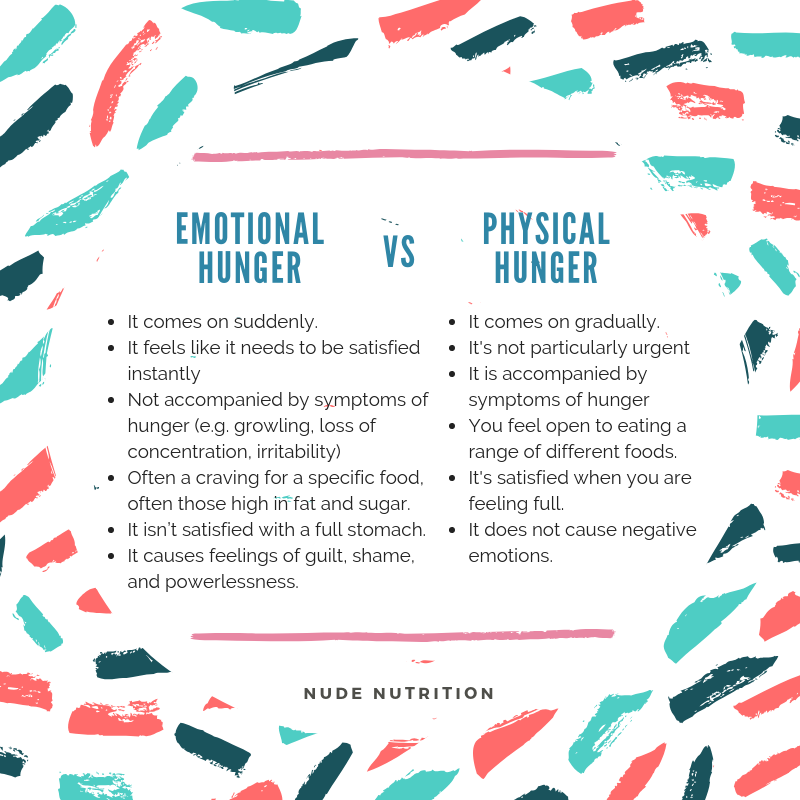
Emotional Versus Physical Hunger

Are you trying to pursue weight loss?

Dieting (which is the pursuit of weight loss), can interfere with our hunger hormones. 

There are two key hormones that help regulate hunger – ghrelin and leptin.

Ghrelin is the hunger hormone, produced by the stomach mostly, but also the small intestine, pancreas and brain. It goes up in response to food deprivation (aka dieting). Ghrelin receptors are located in the brain (a small part called the hypothalamus). The more you ignore hunger, the more ghrelin gets produced to make you eat. The body is pretty clever! It typically switches off when you eat enough food. It’s not a matter of willpower when you cave in, and the diet fails. Biology is trying to make you eat and survive. Your body does not know that you may have a fridge full of food, and a supermarket around the corner. 

However, for chronic dieters, ghrelin may stay elevated after meals as a result of being in a negative energy balance (aka withholding your body from energy). People who have lost weight, therefore, seem to have a higher level of ghrelin circulating around their blood, which can be elevated for a year after dieting! It’s no wonder weight loss maintenance is near impossible, when the body is working so hard to bring your weight back up. 

The only way to make your ghrelin turn off, is to eat enough. This signals to another hormone leptin to say “hey, stop eating”. 

The main message is that if you don’t eat enough, your body will continue to pump ghrelin, and make you feel hungry, until you eat.

Are you getting adequate nights sleep?

As mentioned above, there are two key hormones that help regulate hunger – ghrelin and leptin. When the body is sleep-deprived, the level of ghrelin spikes, while the level of leptin falls, leading to an increase in hunger. If you’re feeling abnormal levels of hunger and a desire to eat, check in with your sleep. Does this need some more attention?

Are you setting unrealistic standards? 

Sometimes I notice my clients are setting an unrealistic standard for how much you “should” eat in a day, that they are consistently not able to. This is a sign that the standard is too high, and too rigid. Have you considered that you may not be allowing yourself enough food.  

Too often, I see something like this… 

  • Greek yoghurt & berries for breakfast
  • Nuts or fruit as snacks
  • Greens & protein for lunch and dinner

Later on results in… out of control eating, coupled with guilt, and more out of control eating, only to start again tomorrow.

Biology will always win. So if you’re cutting out food groups (especially starchy foods which are a great source of fibre) or not allowing snacks, flexible eating, and “fun food” into your life, this may be why you’re constantly feeling hungry, unsatisfied, looking for and thinking about food.

The body is really clever at regulating what it needs. It generally needs food that contains fibre (for example: whole grains, oats, brown rice, pasta, fruits, vegetables, nuts, seeds, potatoes (with skin)), unless you have a specific medical condition where other recommendations have been made.

Medications to be aware of…

Some medication and medical conditions can increase appetite. The most common appetite-inducing medications include antipsychotics, antidepressants, mood stabilisers, corticosteroids, and anti-seizure drugs. If you think your medications are interfering with your appetite, it’s best to speak to your healthcare provider.

So what’s the verdict? Why am I always hungry?

I reiterate – the only way to satisfy physical hunger is by eating enough food. But as you can see, it’s also not that simple! There may be a number of reasons why you’re always feeling hungry, from not eating enough, not satisfying your true desires for fear of not being “healthy” or gaining weight, to looking for comfort, tiredness. Ironically, many of these behaviours are compounded by pursuit of weight loss, restriction and control. When we let go of this pursuit, and honour and connect with our body through intuitive eating, kindness, and compassion, a more trusting, connected and happy relationship with food is possible. 

If you’re not entirely sure what the subtleties of physical hunger feel like for you, and you would like to learn more, you may benefit from diving into my free audio guide and workbook. This includes actionable steps towards finding food peace, and food freedom. 
Nude Nutrition Blog

How to stop food obsession

Nutrition Plan: The Pros & Cons of Following One

Nutrition Plan: The Pros & Cons of Following One

Nutrition Plan: The Pros & Cons of Following One

Are you in search of the next nutrition plan or diet plan that’s really going to “work” for you. Maybe you’re even committed to finding a nutrition plan that’s more tailored and personalised to your needs.

But I am going to take a guess that you’ve done this before. 

Am I right?

If you’re constantly “on” or “off” of something, or just generally “worried” about whether you’re eating right, you’ve come to the right place. 

In this article, I am going to explain what a nutrition plan or diet plan is, the pros and cons of following one, and offer up an alternative. 

First of all, what is a diet plan or nutrition plan?

In this context, I am referring to a structured set of guidelines that tells you what, when and how much to eat. It might be rigid, or allow a lot of flexibility. They are usually used for the purpose of pursuing health, for weight loss, or other body goals.

Examples of rules included in a nutrition plan might be:

  • Have protein at EVERY meal and snack
  • Drink water, X Litres a day minimum
  • Every meal must be balanced
  • Always include X pieces of fruit a day

There are also examples of more extreme rigid plans. For example, a Keto Diet Plan, 21 day fix meal plan, intermittent fasting plan, dash diet plan.

Why am I qualified to talk about this?

As a Registered Dietitian having worked in the NHS and in private practice, I have a wealth or experience. I’ve also navigated my own way out of a tricky relationship with food. I therefore, have first hand experience. I’ve worked in settings where I have delivered personalised, tailored, and flexible meal plans, gentle nutrition guidance and education. On the flip side, I have helped people cultivate more of a trusting relationship with food and their body, well away from meal plans and rules. So here’s what I have learnt.

The pros of following a nutrition plan or diet plan

    • A quick fix: Nutrition plans can initially offer something to follow, a sense of purpose, and can take the “planning” element away. For this reason, a nutrition plan might free up some time initially too.
    • Education: A nutrition plan, if balanced, might be able to offer some nutritional knowledge, Also, provide an outline of what a balanced healthy diet might look like.
    • Disease or chronic illness: In some circumstances (like for those on dialysis for kidney failure, with PCOS, diabetes) nutrition education can be very helpful. It can even be life saving when delivered in the right way.

The cons of following a nutrition plan or diet plan

  • Short lived: In my experience, many people find themselves on and off of them. They tend to be short lived, and many people find it unenjoyable, unsustainable and inflexible. As humans, we’re generally not well suited to stick to rules! 

  • Do not allow for spontaneity: What if you just fancy a bowl or cheesy pasta? Or you go to someone’s house and they cook something that doesn’t fit with the plan. Following a nutrition plan can induce guilt and anxiety, and not allow for spontaneity of life events.

  • Offer something to fall off of: Nutrition plans offer something to step onto, and then fall off. This can induce black and white thinking around food, and the sense of being an “all or nothing”. 

  • Induce rebellion eating: This is the voice that comes in when you fall off the nutrition plan, or eat outside of the guidelines. The voice that says “you can’t tell me what to eat” or “I can eat because I want to voice“. It’s usually not attuned to hunger and fullness, and is quite intense, rebellious and not satisfying. Because it’s usually about making a statement.

  • Result in the sod it mentality: When you have one biscuit and think ‘”sod it, that’s me ruined for the day”. Dieters tend to evaluate their successes or failures of eating in terms of the current day. Even just thinking that you have blown your diet plan or nutrition plan is enough to trigger eating more, regardless of hunger or fullness levels.

  • Inflexible and don’t account for varying needs of the body: Just like our emotional needs very day to day, our hunger levels, and what brings us joy, pleasure does too. There is no such a thing as perfect.

  • The irony of thought suppression: Don’t think of a pink elephant…. you thought of a pink elephant right? This is exactly what happens when we try to not eat something because we’ve been told not to. A large body of research indicates that thought suppression is ineffective.

  • The last supper effect: For many, just the anticipation of starting a new diet is enough to trigger overeating. A study on chocolate lovers found that when chocolate restriction was imposed for 3 weeks, it triggered an increase in the amount of chocolate eaten both before and after the restrictive period.

  • The forbidden fruit effect: A large body of research on children has identified that when we tell them not to eat that specific food (red M&Ms for example), the red M&Ms received the most attention and consumption. The same goes when you tell the children not to eat fruit… This means it’s not just an effect that is related to high fat and high sugar foods. It’s the forbidden factor that drives the want to eat the food.

  • Overeating: Restrained eaters are more likely to overeat, at just the perceptions of breaking a food rule. Studies have identified that the mere perception of blowing the diet or falling off the plan, was enough to trigger overeating.

  • They can offer a false sense of hope: Nutrition plans give off the idea that there is a “perfect” or “right” way to eat. In reality, there is no such a thing as a perfect diet.

    If nutrition plans aren’t serving me, what’s an alternative?

    It can seem attractive to be told via a nutrition plan, what to eat, how much to eat, and when to eat, especially when you’re feeling out of control around food. I totally see the attraction of gaining a quick sense of control.

    The thing is, being given more rules, and more things to follow, can actually exacerbate these issues in the long term. Many people that I work with don’t need more nutrition knowledge. In fact, they have a wealth of it. Maybe even too much, so much so, that it’s having a detrimental effect. 

    They need a different approach, and that’s what Intuitive Eating or non-diet support can offer. 

    Non-diet approaches teach people to become more connected with their body, and become the boss of themself. This means, never need to rely on a meal plan again. Sounds exciting right?

    Now this doesn’t mean letting go of all planning per se. Of course, a basic part of self-care is having food available at home to honour your needs as and when. But there is a difference between having a variety of meal options available to honour your needs, versus being strict around what you can eat, and when, without flexibility and spontaneity. 

    So what’s the verdict?

    In my experience, and from the research, nutrition plans and diet plans can do more long term damage than good. Especially in those that struggle with binge eating, secret eating, food obsession, and disconnected eating. They can result in a lack of body trust, and lack of ability to honour and respond to natural signals like hunger, fullness, satiety and satisfaction. Nutrition plans may be the very thing that exacerbated or even started these difficulties. 

    If you’ve been chronically dieting, or trying to pursue thinness or weight loss in some form, even the best, most flexible and gentle nutrition guidelines can still be embraced like a diet. Be mindful of what you read on the internet. It might be time to try something new! There is certainly a place for gentle nutrition planning. It’s a basic form of self-care to have food available to you day to day. However, nutrition and diet plans tend to be more rigid, less flexible, and aim to keep you in a calorie/macro framework, and this is where trouble can occur. 

    If you’re wanting to find out more about building more body trust and becoming the boss of yourself, without relying on nutrition plans, my 7-Steps to Food Peace & Food Freedom audio guide and workbook, might be a good place to start.

    Can You Stop Dieting Without Gaining Weight?

    Can You Stop Dieting Without Gaining Weight?

    Are you wondering if you can stop dieting without gaining weight?

    Perhaps you’re wanting to stop counting calories, begin reverse dieting so that you can eat naturally and normally?

    Whilst we know weight loss is possible for the majority it often can creep back on (and more).

    If you’ve experienced stopping dieting and gaining weight back, or have a fear weight regain after dieting, you’re not alone. 

    Stopping weight gain after dieting, is not about needing more willpower.

    Research tells us that our bodies are not designed to be withheld from food.

    In fact, there is level A evidence (the highest level of evidence available) to show that regardless of the degree of initial weight loss people experience, most weight is regained within a 2-year period and by 5 years the majority of people are at their pre-diet body weight.

    Our bodies try their hardest to protect our highest adult weight. 

    The theory behind this is called the “set-point” weight. That’s the weight that our bodies are genetically programmed to maintain – and this can vary across our life span.

    If you and I were to eat the same thing each day, and do the same amount of exercise, our bodies would not be the same size.

    Our weight is not designed to stay the same, despite what diet culture has us believe. 

    And our set-point weight can be changed, through dieting. But not the way that I think you’re wanting to hear.

    When you repeatedly try to force your body below where it naturally wants to be, your body may eventually increase your set-point range in order to protect you from future states of food deprivation (aka dieting). 

    That’s why up to two thirds of people that re-gain weight, regain it plus more. The weight can just keep rising with each and every diet.

    Your body then tries to defend our highest adult weight.

    And I’m not here to shame weight gain or say that this is your “fault”. I am here to say that your body is just doing its thing to keep you alive, and if weight regain happens after dieting, calorie counting, restriction, it could well be because your body is just protecting you! 

    The cycle goes something like this… 

    So is it possible to stop dieting without gaining weight?

    The answer is not straightforward. Because weight is dependent on a number of factors including your genetics, dieting history, medications, body composition, health conditions, your eating behaviours, your relationship with food and the list can go on.

    Around 70% of individual differences in body weight are determined by genetics.

    And our bodies have their own internal thermostat to keep you at this set-point weight. 

    A bit like how our body controls its temperature within a tightly controlled range, the body has its own weight thermostat that sits in a part of your brain called the hypothalamus. It’s constantly working and being sent signals from your body fat stores to keep your body safe and happy.

    When your brain notices tiny fluctuations in fat stores, your body responds by telling your body processes (like appetite, carbohydrate cravings) to maintain your set point. It’s a finely tuned and robust process.

    Your set point can be anywhere along the spectrum, from thin to fat – and it might not necessarily fit within societies ideas of “healthy” or “ideal”.

    So in answer to the question “can you stop dieting without gaining weight?” – It’s pretty out of your control. 

    How do you figure out your set point weight?

    Your set point weight is the weight your body goes to when you:

    • Eat to your appetite
    • Respond to signals of hunger and fullness
    • Don’t fixate on your weight or food habits
    • Stop dieting – the weight it usually returns to (and this can creep up the more you diet)
    • Take care of yourself physically and mentally

    No measure can determine your set-point weight, but scientists estimate that the average person has a set-point range which varies between 5-10ks. And the only way to identify what your set point weight is, is to learn how to eat normally… It sounds simple, but I know how complex that statement is, in a world that’s telling you that you can’t be trusted around food, and need to control – how are you supposed to know what normal eating is?

    When you try to control your weight through dieting (pursuit of weight loss in any form), you disrupt your body’s internal regulatory system. It creates a disconnect between mind and body. The body is saying one thing (e.g. feed me, I am hungry), and the mind is saying another (e.g. you can’t eat again, you’ve already hit your calorie limit today), and boom… this is the perfect storm for binge eating, food anxiety, food guilt, eating past comfortable fullness, secret eating, etc. There is a disconnect between biology (the body) and the mind. Biology always wins. It’s powerful. 

    If you’re wondering why weight gain happens easily…

    The bottom of the set-point range is closely regulated, however, the top end is not so. That means your body sees weight gain as less of a threat, and it can therefore be easy to override the signals that say “stop eating”, subsequently gain weight, and rise above the natural set point. The set point weight then rises. Also, dieting not only disrupts the signals your body is trying to give you, but it can raise the set-point weight. Hence why body weight can increase with each and every diet.

    So what can you do?

    Battling with your set-point nearly always ends up with negative consequences, physically and mentally – with a side of body dissatisfaction and food preoccupation. 

    But the good news is that there is something else you can do instead, that has more of a positive effect on self-worth, and overall health and wellbeing. And most importantly, it challenges the popular and incorrect idea that weight is entirely in our control, is our personal responsibility, and determines our worth!

    Intuitive Eating is a non-diet approach to health, helping you connect with your innate inner body wisdom. It’s a weight-inclusive, evidence-based model with a validated assessment scale and over 120 studies to date. Research shows that intuitive eaters tend to eat more variety, have more body appreciation, more protection against eating disorders, more connection with their body, and:

    • Are not preoccupied with food or dieting
    • Do not label foods as good or bad
    • Place importance on taste/satisfaction of food
    • Choose foods that enhance body’s function
    • Have awareness & trust of hunger + satiety cues
    • Use hunger and satiety cues to determine when & how much to eat

    Are you ready to get out of the repeated cycle of losing weight only to regain it?

    To stop worrying about stopping dieting without gaining weight, and to try something new?

    If this sounds like something you might be interested in exploring further, why not try my free audio guide with an actionable workbook, with 7-steps actionable steps to finding food peace & food freedom.

    You’re not alone, you’re not “broken”, and I’m here for you! 

    Recommended Resources:

    Is Intermittent Fasting Effective for Weight Loss?

    Is Intermittent Fasting Effective for Weight Loss?

    Is Intermittent Fasting Effective for Weight Loss?

    Firstly, what is Intermittent fasting (IF)? IF is a pattern of eating that alternates between periods of fasting and eating. The fasts can be:

    • Daily (e.g fasting for 16hours and allowing an 8-hour eating window)
    • Weekly (e.g. fasting for 24hours 1-2 days per week)
    • Yearly (e.g. fasting for 3-5 days once or twice a year).

    These diets have a strong media presence and have been linked with many celebrities. They seem to be popular because of their simple nature.

    There are typically two goals for people who fast. Either weight loss, or optimisation of health markers, with or without weight loss.

    Can Intermittent fasting help with either of these goals?

    Weight loss can occur simply as a result of a shorter feeding window leading to reduced calorie intake. The research that we have to date, has shown no significant differences in weight loss, blood fat concentrations, blood sugar levels and insulin levels in those who engage in continuous restriction (the type that characterises other diets), compared to IF (1, 2). *

    The longer-term effects (beyond 12 months) of this approach remain unclear, and further research is therefore required. 

    What are some of the benefits of avoiding eating before bedtime?

    Late-night eating is typically defined as eating past 8 pm. There is some research that may support the benefits of eating the biggest calorie meal earlier in the day on blood fats and blood sugar levels, but much of the research we have around nighttime eating is conducted in shift workers who have quite extreme patterns.

    It’s important to highlight the huge amount of class privilege that comes with being able to choose the timing of eating. Some people can’t even eat consistently, because they can’t afford it.

    Humans are complex, and putting time restrictions on eating is often not practical and does not allow the individual to honour their natural hunger signals. As a clinician, I encourage individuals to pursue what feels and works best for them.  

    So if not intermittent fasting, what would you recommend to control weight?

    There is limited evidence to support the long-term benefits of weight loss. Whilst we know that weight loss is possible in the short term, there is overwhelming evidence that shows any form of intentional weight loss has no long-term success.

    Regardless of the degree of initial weight loss seen with lifestyle intervention, most weight is regained within a 2 year period, and by 5 years the majority of people are at their pre-intervention weight. 

    We’re often led to believe that dieting in any form is pretty safe and harmless. However, what we’ve now come to know through research, and clinical experience, is that dieting can lead to all sorts of complex mental and physical issues. Common issues include things like binge eating, feeling addicted to certain foods, anxiety, stress and shame around food, eating disorders and disordered eating, weight yo-yoing, or weight increasing with each and every diet attempt. 

    For this reason, I take a Non-Diet approach and weight inclusive approach to nutrition (Intuitive Eating) which is an evidenced-based practice that supports the pursuit of health without focusing on weight or body size. This approach supports health-promoting lifestyle which have been proven to improve health regardless of changes in body weight. 

    If you’re wanting to get started on this journey, sign up to my FREE 7-steps to find food peace and food freedom. 

    References:

    1) https://www.ncbi.nlm.nih.gov/pubmed/27338458

    2) https://www.ncbi.nlm.nih.gov/pubmed/29419624

    Gut Health Testing Kits – Expert Opinion

    Gut Health Testing Kits – Expert Opinion

    Gut Health Testing Kits – Expert Opinion

    Gut health is an exciting area, and there’s tons of emerging research. You might be wondering how we can best manage our relationship with food, whilst juggling the improving gut health?

    Why do we care about gut health?

    Our guts do a whole lot of important work. Our small intestines play a role in up-taking nutrients from the food we eat and then shuttling those nutrients around for use in the rest of the body. The large intestine is important to maintaining fluid and electrolyte metabolism (like salt, potassium, and magnesium) while also digesting the more fibrous foods we like to eat. Both the small and large intestine are home to bacteria that help maintain our internal ecosystem. These bacteria are thought to play a role in: The digestion of nutrients, our ability to fight infections (most of our immune system is located in the gut!), and are thought to play a role in our mental health as well.

    Principle no.10 of Intuitive Eating (IE) is “honour your health with gentle nutrition”. There’s a reason that this principle is last. So if you’re still working through your relationship with food, keep working through the principles! “Healthy eating” really needs to be put on the back-burner for a short while – I know this might sound a little odd coming from a Dietitian.

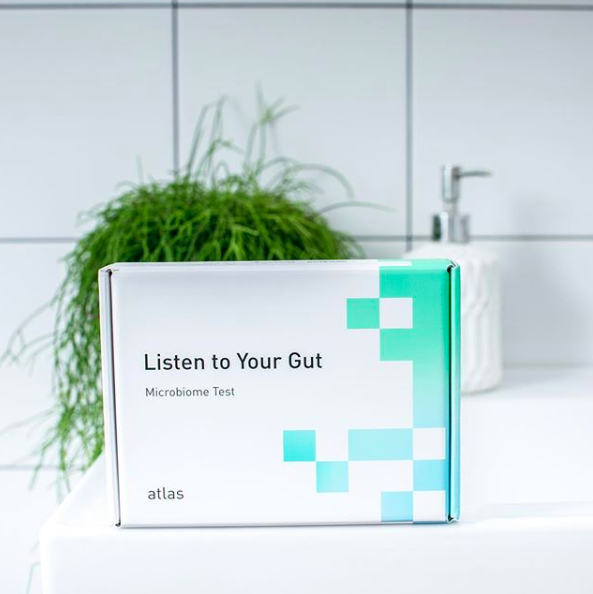
    In light of ‘honouring health’, Atlas Biomed asked me to try out their microbiome testing kit. They’re on a mission to drive the movement towards preventive healthcare with technology that helps people understand their gut. They’re the only company in the UK to have MHRA approval to sell gut tests directly to consumers – this means they are regulated for safety, quality, and effectiveness and are supported by Gov.uk.

    Atlas Biomed Testing Kit

    After receiving my home test kit, I posted a very small sample of my poop off to the lab in a pre-paid box. My results came back in 5 weeks. I was fascinated to see that my microbiome diversity level was just above average, that I’m a “veggie muncher”, and that my risk of certain disease is “average” to “low”. It was also interesting to see the long lists of the bacteria in my gut!

    So what’s the low down? Are these tests worth your money? I will let you decide.

    Pros:

    • It’s fascinating to get a glimpse into the diversity of bugs in my gut.
    • It could be interesting to compare test results month on month.

    Cons:

    • No standards of ‘normal and healthy’ exist for the gut microbiota.
    • When assessing risk of disease based on gut microbiome, there’s a huge chicken-and-egg question involved.
    • There is little understanding for what healthcare professionals can recommend off the back of these results that would be different to current dietary recommendations for health individuals which are to increase our variety of fibre containing foods.
    • The recommendation and insight could be triggering for someone with disordered eating/eating disorders.

    What will change for me off the back of this? Not much! As per the current recommendations to improve gut bacteria in a healthy individual, I will continue to be a “veggie muncher”, finding tasty and exciting ways to add different fruits, veggies and fibrous foods to my diet amongst munching on other tasty fun foods too!

    So now you may be wondering, what can you do specifically to support your gut health outside of taking a test?

    Bowl of vegetables

    Here are 4 dietary strategies to support your gut

    1. Enjoy those fruits and veggies! Fruits and vegetables are high in vitamins, minerals, and fiber that not only support our gut health but support our whole body. Incorporating a few fruit and vegetable sources throughout the day has been shown to promote the health of your gut. Consuming increased amounts of these foods have been shown to be associated with lower risks of colon cancer too!

    2. In addition to increasing dietary fiber through fruits and vegetables, you can increase dietary fibre through the consumption of whole grains! Oats, whole grain breads, brown rice, and quinoa are all examples of whole grains you could give a try.

    3. Probiotics are another means of improving gut health. When you think probiotics, think fermentation! These foods include yogurt, kimchi, kefir, miso, and sauerkraut. These are microorganisms that support gut health. Some health-food stores may sell probiotics in a pill form, but they are rather expensive. We also don’t know what combination of these microorganisms and at what dose are necessary to promote health and what microorganisms don’t really help. Therefore, for healthy individuals, it is recommended to take a food-first approach and include probiotics from food sources rather than a pill.

    4. We have discussed probiotics and how having those in your diet are good for your gut health, but what supports probiotics? Prebiotics are microorganisms that support the health of the probiotics, which ultimately support us. Not all fiber sources are prebiotics but most prebiotics are a source of fibre.* Sources of prebiotics include many different fruits and vegetables, like; apricots, dates, dried figs and mango, watermelon, asparagus, beetroot, leeks, okra, onions, almonds, pistachios, rye, spelt, cashews, chamomile tea, silken tofu, fennel tea, and legumes.

    One thing that is unique about the Atlas Biomed microbiome test is that they remove some of the guess work for you. They were able to provide me with some more insight into my own personal microbiome diversity and made recommendations on which foods I could opt to include in my diet to increase the diversity of my microbiome. It looks like meals with marrow, pumpkin, garlic, and walnut are on the cards for me!

    If you want to know more ways to support not only your gut health, but your overall health through gentle nutrition, seek out the help of your local registered dietitian. Because this article cannot replace individualised recommendations. We would love to help!

    *Hannah D. Holscher (2017) Dietary fiber and prebiotics and the gastrointestinal microbiota, Gut Microbes, 8:2, 172-184, DOI: 10.1080/19490976.2017.1290756

    Note: This article was written as a paid partnership with Atlas Biomed. 

    Game Changers: Expert Opinion Piece

    Game Changers: Expert Opinion Piece

    The Game Changers is a Netflix documentary. It follows the winner of The Ultimate Fighter, James Wilks. He was on a quest to find out how nutrition could improve recovery and performance, after suffering a major injury. The movie features several professional athletes, all touting a vegan or “plant-based” diet.
     
    The main message of the film: Plant-based diets are the key to athletic achievement and health.
     
    This is quite a loaded message, so we will break down some of the documentary’s main points here.
     

    Is the Game Changers credible?

     
    Pseudoscience has become commonplace in the wellness industry. So it can be difficult to differentiate what’s fact from fiction, and who to listen to. 
     
    Some of the core principles behind credibility include:
     
    1) Ensuring the information provided is not out of the remit of the person providing it. (E.g. a personal trainer providing advice on nutrition without training or qualifications). One of the first big impact statements of the Game Changers documentary is when Wilkes describes becoming injured after a sparring match. He subsequently spends 1,000 hours studying peered reviewed articles on how nutrition can improve recovery. The statement was used to create credibility. Yet, all I could think about is the process that it takes to become an expert in nutrition or a registered dietitian.
     
    2) Providing complete information. This means:
    • Providing information on the context
    • Not presenting personal experience as fact
    • Providing supportive evidence from credible sources, with references
    • Providing appropriate caveats to allow the reader to go away and make an informed decision
    • Any conflict of interest or sponsorship should be stated
    As you will read below, this was not the case for The Game Changers. 
     
    3) Offering a balanced critique. This means providing information in a tone that is not overly biased, emotional or exaggerated towards one argument. To also have content proofed by an unbiased party to check claims for being exaggerated. The documentary was very much one-sided. It did not address other arguments for where a Vegan diet might not be appropriate. Or other confounding factors that can affect the claims made. 

    While Wilkes read about nutrition for quite some time, it cannot be compared to the education a qualified nutrition expert receives.
     
    Often times in our culture, people who live in fit bodies give nutrition advice. It is accepted by the general public because it is assumed their leanness correlates to their nutritional expertise. This is one of the many ways in which our biases or internalised human preferences manifest in our everyday lives.
     
    When seeking nutritional advice, Registered Dietitians and Registered Nutritionists are educated professionals in the field. While Wilkes meant well, this documentary could’ve been a lot more factual. Especially had they collaborated with more experts in the complex field of nutrition.

    Let’s discuss some of the claims, faults, and truths of the Game Changers Movie.

    Are eating plants good for us?

    Of course! Nutrition experts have been saying this for years! But, to eat more plants, you don’t have to become a vegan or vegetarian. Plants and whole grains are high in dietary fibre. These are associated with reduced cholesterol and a reduced risk of heart disease.
     
    While some may pursue a meatless diet to protect the earth, others may pursue this diet to justify disordered behaviours. This can be problematic. Eating a vegan or vegetarian diet is not for everyone, but that doesn’t mean if you eat meat you cannot also eat plants!

    Will transitioning to a plant-based diet give you more athletic endurance?

    The film features an ultra-runner, a fight between Nate Diaz and Conor McGregor, and even football players. When these athletes made the switch to a plant-based diet, they found they had more endurance and energy. But, it’s likely that they were eating more carbohydrates than they were before. This is because plant-based protein sources tend to contain more carbohydrates.


    vegan diet

    Plant-based sources of protein like beans, pulses and other starches do not contain all the essential amino acids that our bodies need. To achieve a balanced diet, a variety of plant-based protein sources are required. These plant-based protein sources, tend to naturally contain more carbohydrates. So eating a low-carbohydrate vegan diet would be next to impossible.

    In our society, carbohydrates get a lot of heat. Often athletes eat too few carbohydrates out of a cultural fear that carbohydrates will slow them down. If these “plant-based” athletes ate more carbohydrates from the start, it’s possible they would’ve seen similar athletic benefits.

    What about the doctors featured in Game Changers who swear by vegan diets?

    Several physicians featured in this film have a financial stake in vegan diets. They profit in their own entrepreneurial adventures when the vegan diet succeeds. This is a conflict of interest. For example, Dr. Ornish, Ornish Lifestyle Medicine, has authored several books. He swears by a low-fat, high carbohydrate, vegetarian diet. Over the years he’s faced a lot of criticism for his claims that can come off as alarmist.

    Doctor in white coat

    Dietitians exist as allied health professionals because doctors don’t typically receive the training required to deliver nutrition advice. Medical schools usually provide as little as one nutrition course. Physicians are medical experts, but once again this film missed the opportunity to hear from a nutritional expert.

    Does eating meat hurt how blood flows throughout the body?

    Some football players from the Miami Dolphins were asked to eat either a bean or meat burrito. They tested the effect of a plant-based versus meat-based burrito on the blood composition of the players.
     
    It appeared that the athletes had their blood drawn soon after eating (not in a fasted state). This was then taken in vials to a centrifuge. In a non-surprising outcome, their non-fasted blood draws showed greater fat content in the blood of players who ate the higher fat, meat-based burritos.

    So what’s going on here?

    When we eat, food travels from our mouth to the oesophagus, stomach, and then to the small intestine. As it travels, it is broken down by acid and enzymes. Once broken down and in the small intestines, the food is taken up by the bloodstream for transport so that it may be used by the body. It is no shock that the group who ate more fat had fat in their bloodstream not long after digesting their burritos.
     
    The film goes on to cite a study which tells us hamburgers hurt endothelial function (the lining of our blood vessels). Asker Jeukendrup, PhD, a world-leading expert in sports nutrition critiqued this. He notes that the hamburger study which was hyped in the Game Changers film had only eleven participants. In research, this number of people is not enough to make claims about all humans.
     
    The study which was not fully explained in the film, actually found that eating avocado, offset the effects of the hamburger. This was left out of the documentary. Also, the study was funded by the Avocado industry, which means there is a conflict of interest. 
     
    (A conflict of interest means that financial or other personal considerations may compromise, or have the appearance of compromising a researcher’s professional judgment in conducting or reporting research).

    Does eating plants help endothelial function?

    There is some evidence to support that plants high in nitrates, like beets, can dilate (make wider) our blood vessels. This means ingesting something beetroot juice can widen blood vessels and improves blood flow. This is something sports dietitians have known for some time and have recommended to athletes on a case-by-case basis.

    Beetroot Juice

    Can I get enough protein on a vegan or vegetarian diet?

    Of course! Our culture does place a huge emphasis on meat to get “big and strong”. But we can definitely meet our protein needs without animal products. It can be a challenging task, so prior to making the switch, it’s recommended to start small. It’s also possible to seek the advice of a registered dietitian or registered nutritionist for help.

    Is a plant-based diet vegan?

    The movie never defines what they mean by “plant-based”. Is it vegetarian? Is it vegan? Is it mostly plants with some meat? Who knows! The athletes seem to use the terminology interchangeably and this is a major flaw.
     
    Nutrition can be tricky and it’s not all black and white. It takes time, many lessons in statistics and expertise to read and understand scientific literature.

    Take home message from the Game Changers:

    • Veganism and vegetarianism are acceptable ways to eat.
    • Veganism and vegetarianism are not for everyone.
    • Eating more of the plants we like to eat, regardless of whether we eat meat, is good for our health.
    • Documentaries like The Game Changers or What the Health are often sensationalised and use language that can be fear-mongering.
    • While studies have found there to be a reduced risk of certain health conditions when following a vegetarian or vegan diet, this is observational data. This means that large groups of people are followed/observed over time and associations are made. This sort of data cannot speculate that the vegan diet caused the person to be more healthy or have reduced risk of certain health conditions. We can only make associations. We also know from population data that those who follow vegan-based diets,  then to be more “health-conscious” in general. So is it all about the diet? Or is it that they engage in other health-promoting behaviours? For example not smoking, moving more, using strategies to reduce stress etc.

    Vegan diet

    My final thoughts trickle down to my public health roots. I would like to point out that having the resources to eat an entirely vegan diet requires privilege.
     
    It can be costly to buy fresh produce, have access to that sort of food, and have the proper utensils/appliances to be able to cook the foods you buy.
     
    Is being vegan good for the environment? Yes.
     
    Is it feasible for everyone? Absolutely not.
     
    Does being vegan make you more moral? Nope.
     
    The way you eat holds no moral value. Everyone’s circumstances are different and so a decision to pursue a meatless diet is an individual one.